All Categories
Featured
Table of Contents
The vacancy-to-unemployment ratio supplies a helpful lens here (figure B). While the labour market has actually cooled considerably from the remarkable tightness of 2021-22, vacancies have actually more just recently stabilised even as joblessness has continued to edge up. This pattern recommends that the change in the labour market is significantly taking place through slower hiring and weaker job matching.
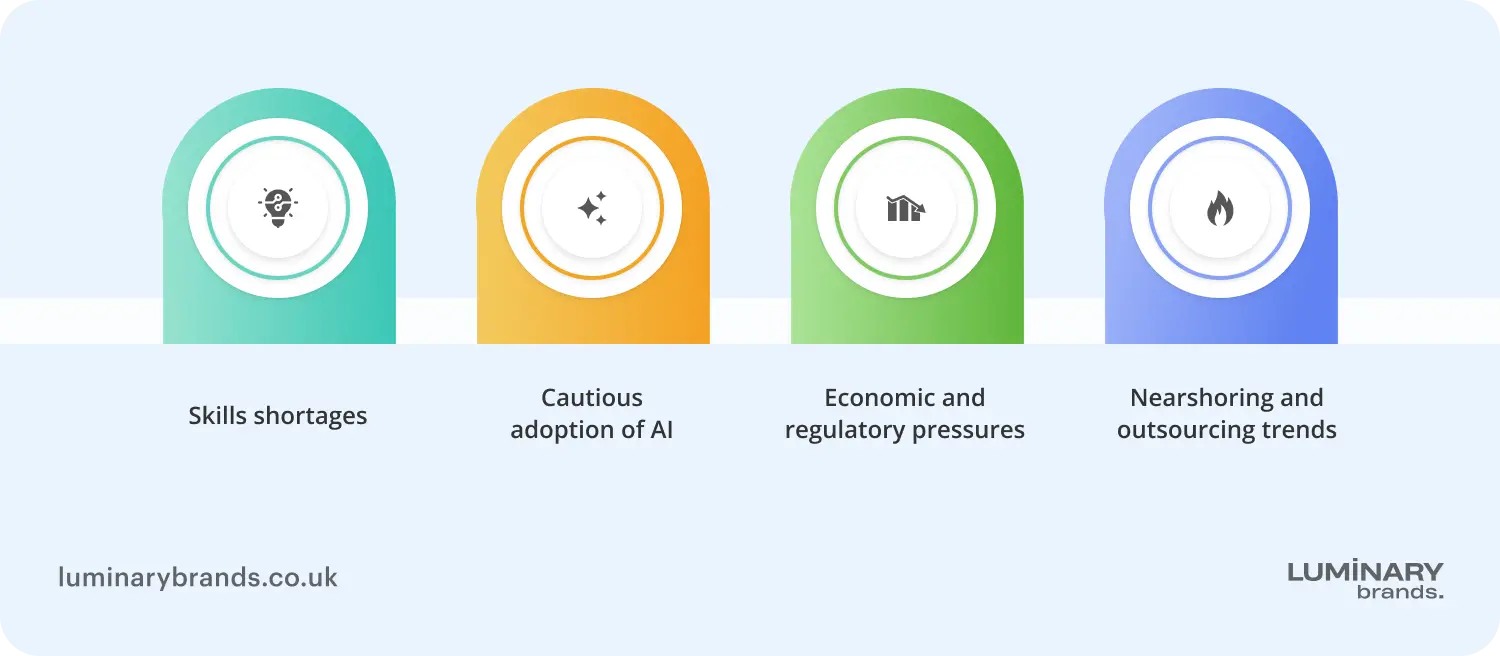
While our central projection does not presume such a shift, this is an important danger that we are keeping track of carefully. Evidence from business surveys suggests AI is presently being used generally to augment particular tasks particularly in administrative, analytical and customer-facing functions rather than to drive massive labor force reductions. Noted performance gains have actually up until now been focused in narrow functions, with restricted immediate influence on overall work.
For the Monetary Policy Committee, the key judgement is how quickly rising joblessness translates into lower wage growth and services inflation. While we anticipate Bank Rate to fall to 3.25 percent by year-end, persistent wage pressures provide a threat to this view. For the general public financial resources, slower work development and weaker incomes characteristics would minimize earnings tax and National Insurance coverage receipts.
The UK economy will grow more slowly next year than any other major sophisticated country as taxes and high rates of interest take their toll, according to the most recent projections from the OECD. In a dismal outlook, the Organisation for Economic Co-operation and Advancement reduced its forecast for UK development from 0.7 per cent to 0.4 per cent, the least expensive in the G7 apart from Germany.
In 2025, it projects that the UK will grow by 1 per cent the weakest performance in the G7. By contrast, the United States economy is forecasted to power ahead this year with 2.6 percent development, followed by Canada at 1 per cent, and Italy and France at 0.7 per cent.
How Technological Transformation Reshapes Operations for 2026
German economic development is forecast to increase from 0.2 per cent this year to 1.1 per cent next year, which will see it leapfrog Britain. The OECD outlook is more cynical than that released by the International Monetary Fund (IMF) earlier this year, which forecast UK growth of 1.5 percent.
Interest rates required to stay high in order to deal with sticky inflation, it stated. "The financial and monetary policy mix is effectively restrictive and should stay so up until inflation returns durably to target (2%)," the OECD's UK financial outlook for 2024 discovered.
Unlocking Growth Capital for UK ScaleThe OECD anticipates eurozone inflation currently 2.4 per cent will be considerably lower than UK inflation currently 3.2 percent over the same duration. The think tank said "fiscal prudence" is needed till the Bank of England's inflation target of 2 per cent is met, which government costs ought to be directed towards "supply-enhancing financial investment" such as the NHS.
Professional Management Insights for Agile Enterprise Excellence
The unemployment rate increased to 4.2 percent for the current three-month duration to February. The OECD forecasts this will continue to increase, reaching as high as 4.7 per cent in 2025 "as the labour market cools". Chancellor Jeremy Hunt said the OECD forecast was unsurprising offered "our priority for the in 2015 has been to tackle inflation with higher interest rates.

Get latest updates and insights provided to your inbox.
[LONDON] The International Monetary Fund raised its development projection for Britain's economy this year on Monday (May 18) but warned that additional "domestic unpredictability", at a time when political instability is swallowing up the federal government, could strike costs and financial investment. In an upgrade that finance minister Rachel Reeves hailed as an indication of development by embattled Prime Minister Keir Starmer's government, the IMF stated Britain's economy would grow by 1.0 per cent this year.
It would still represent a downturn for Britain from 2025." While the UK economy has actually stayed resilient over the last few years, the war in the Middle East is moistening near-term prospects," the IMF stated in its yearly evaluation of Britain's economy. The brand-new, greater forecast for 2026 was because of pre-war financial momentum which was shown in current stronger-than-expected growth and modifications to previous data, the Fund said.
Why Sustainable Supply Networks Drive UK Industry Success
Provided the uncertainty about the Iran conflict, the BOE might have to cut or raise rates and should "be prepared to respond forcefully" if second-round results such as employee demands for greater pay or business raising their selling costs showed stronger than prepared for. Over the previous 2 weeks, British politics has been rocked by speculation about Starmer's future, driving benchmark 10-year loaning costs to their greatest because 2008 on Friday on the possibility of weaker financial discipline.

Latest Posts
Why British Mid-Market Executives Prioritise Sustainable Transformation Models
Navigating the UK Enterprise Growth in 2026
Analysing UK Trade Reports for Market Growth